

Control Isn't About Willpower. It's About This.
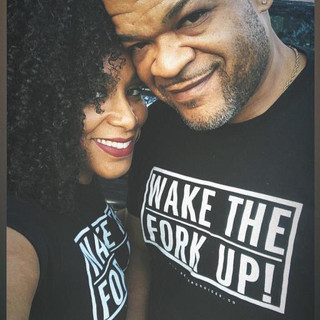
We're closing out July where the whole month was always headed: control.

We talked about the decision in week one. We talked about what a GLP-1 medication can and can't decide for you in week two. We talked about the habits that hold the results up in week three. All three of those conversations point to the same single word, and it's the one most people misunderstand the most.
Control isn't about willpower. It's not about gritting your teeth harder than the next person. It's about ownership. Recent research on self-control backs this up directly: what predicts whether someone follows through isn't raw grit, it's whether the goal still feels like theirs when things get hard (Werner & Berkman, 2024).
What Control Actually Is
Researchers describe something called locus of control, whether a person believes the outcomes in their life are driven mostly by their own actions or mostly by outside forces. A 2024 systematic review of health behavior interventions found a consistent pattern: improving someone's sense of internal control tends to improve their health outcomes, almost regardless of the specific condition involved (Mozafari et al., 2024).
Control is accurately locating where the power actually sits.
This connects directly to self-efficacy, your belief in your own capacity to execute the actions needed to produce a result. A 2023 study following adults through a 12-month weight regain prevention program found that self-efficacy and weight outcomes move together in a loop, researchers called it a “Weight Management Cycle” (Palmeira et al., 2023).
This is why we keep saying relapse is part of the process and not proof you can't do this. Every time you fall off and come back, you're feeding the loop in the right direction.
The Harsh Truth About Control
We said this back in 2022 and it's still true: control does not mean controlling the outcome. It means being aware of, and accountable to, yourself.
CONTROL IS NOT
The number on the scale moving on your schedule
Other people noticing
A medication, a meal plan, or a program doing the work for you
Getting it right every single day
CONTROL IS
Eating fresh foods, lean proteins, fruit, vegetables, and whole grains because you decided to
Saying no, plainly, without over-explaining yourself
Recognizing your excuses as self-imposed roadblocks, not facts about who you are
Re-deciding, every time you slip, instead of declaring the whole thing over
What 19 Years Taught Us That No Quick Fix Could
We didn't have a GLP-1 medication when we started. We didn't have a shortcut. What we had was the daily, unglamorous practice of deciding again, for almost two decades now, and a combined 300+ pounds that has stayed off because the decision never stopped being ours to make.
Whatever tool you use, medication, a meal plan, a coach, a program, the control was always going to come back to you in the end. The tool can support the decision. It cannot replace it.
Carrying This Into August
You don't need to feel ready, you don't need to feel motivated, and you don't need a perfect track record, you need to keep locating the power where it actually lives, which is in the next decision, not the last one.
Structure over struggle, always.
References
Mozafari, S., Yang, A., & Talaei-Khoei, J. (2024). Health locus of control and medical behavioral interventions: Systematic review and recommendations. Interactive Journal of Medical Research, 13, Article e52287. https://doi.org/10.2196/52287
Palmeira, A. L., Sánchez-Oliva, D., Encantado, J., Marques, M. M., Santos, I., Duarte, C., Matos, M., Larsen, S. C., Horgan, G., Teixeira, P. J., Heitmann, B. L., & Stubbs, R. J. (2023). Motivational and self-efficacy reciprocal effects during a 12-month weight regain prevention program. British Journal of Health Psychology, 28(2), 467–481. https://doi.org/10.1111/bjhp.12635
Werner, K. M., & Berkman, E. T. (2024). Motivational dynamics of self-control. Current Opinion in Psychology, 59, Article 101859. https://doi.org/10.1016/j.copsyc.2024.101859


https://soicauxsmb24.com/ thấy nhắc đúng chủ đề “Soi cầu MB ngày 3/9/2026” nên mình ghé qua xem thử, kiểu hôm đó đang cần xem nhanh có gì mới thôi. Mình vốn hay sợ mấy trang soi cầu chữ nghĩa lộn xộn, mà trang này nhìn lại khá dễ chịu. Tiêu đề theo ngày để ngay trên đầu nên lướt phát là nhận ra đúng bài mình cần, không phải kéo lên kéo xuống nhiều. Ở dưới họ để phần “dự đoán XSMB hôm nay” theo từng khối, chữ tách đoạn rõ nên đọc kiểu lơ đãng vẫn nắm được ý. Mình không soi sâu số nào, chỉ xem cách trình bày và cảm giác dùng. Menu nằm chỗ dễ thấy, chuyển…