

The Decision Isn't the Finish Line
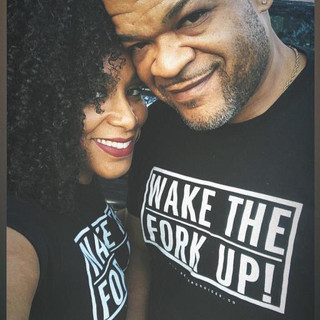
What commitment actually requires.

I already decided. I made the choice, I started the program, I told everybody I was serious this time... so why does it feel like I'm starting over again?
We hear some version of that almost every week. And every time, it tells us the same thing: somewhere along the way, “deciding” got sold to us as the hard part. Make the decision, and the rest is supposed to take care of itself.
It doesn't. And that's not a flaw in you, it's a flaw in how we've been taught to think about commitment.
This month, our theme is The Commitment of the Decision. Before we go anywhere else with it, before we talk about food noise, GLP-1 medications, habits, or control, we have to start here, because everything else this month builds on this one correction:
The decision is not the finish line. It's day one of a job that repeats.
The Surface and the Root
We talk a lot about surface versus root around here, because it's the difference between a result that lasts and one that doesn't.
The surface of commitment is the moment. The Sunday-night declaration. The “new month, new me” caption. The signed-up program. It feels like progress because it is progress but it's the visible 10% of the iceberg.
The root of commitment is what happens on day 14, when nothing's changed yet and you're tired and the drive-thru is closer than your stove. The root is invisible, repetitive, and unglamorous, and it's the only part that actually produces the outcome.
If you're only working the surface, the root stays exactly where it was. And if the root stays the same, you already know what happens: you get the same year you've had every year before this one.
What the Research Actually Says About “Deciding”
The Transtheoretical Model, better known as the Stages of Change model, is still one of the most widely used frameworks for understanding how people actually change. A 2024 large-scale study applying the model to physical activity found that where someone sits in the “deciding” phase versus the “doing” phase predicts very different things about what kind of support actually helps them (Oba et al., 2024). A 2025 systematic review of stage-based interventions reached a similar conclusion: people don't move through change in a straight line, and programs that plan for that outperform ones that don't (Fawole et al., 2025).
Here's the part most people skip past: this model treats relapse as a normal, expected part of the process, not a sign the person failed, but a sign the work has moved into territory that requires a different skill. The skill isn't “deciding harder.” It's re-deciding, on schedule, every time you slip.
Read that again: relapse is in the model. It's not a detour from the process, it is part of the process. Which means the version of you who falls off on a Tuesday and gets back on by Wednesday isn't failing at commitment. She's doing exactly what commitment requires.
What derails people isn't the falling off. It's believing the first slip means the decision didn't “take,” so why bother re-deciding.
The 3 C's, Refreshed for Right Now
Years ago, we wrote about the three things that have to be in place for any real change to hold: Commitment, Consistency, Control. That post still holds up, because the framework hasn't changed, your life has changed around it. So let's bring it back, sharper:
Commitment is the decision to change, made consciously, for a reason you can name out loud.
Consistency is the decision repeated, what you do today, you do again tomorrow, whether or not you feel like it.
Control is the only thing you ever actually had power over in the first place: not the outcome, not the timeline, not other people's choices, just your own, made daily, with your eyes open.
Harsh truth: most people quit at the first C and call it the whole journey. They decide, they feel the decision, and they mistake the feeling for the work.
Real solution: the decision is the ignition, not the engine. Consistency is the engine. Control is what keeps your hands on the wheel when the road gets boring or bumpy, which, eventually, it always does. Recent research on self-control backs this up: what determines whether someone follows through isn't raw willpower, it's whether the reason behind the goal still feels like theirs when things get hard (Werner & Berkman, 2024).
What This Means for July
This month, every piece of content we put out is going to circle back to one question: what is actually yours to decide, right now, today?
That includes a conversation we know a lot of you need about GLP-1 medications, about what happens when you start one, stop one, and feel like you're back at square one. We're not avoiding that conversation. We're building up to it, because the medication conversation only makes sense once you understand this: no tool, including a prescription, can make the daily decision for you. More on that next week.
Name your why, out loud, today. Not the Pinterest version, the real one.
Pick one decision you'll re-make tomorrow, no matter what today looked like.
Expect the slip. It's in the model. Plan your comeback before you need it, not after.
Structure over struggle, always.
References
Fawole, H. O., Itua, S. A., Idowu, O. A., et al. (2025). Effects of transtheoretical model of change-based interventions on physical activity among older adults: A systematic review of randomised controlled and non-randomised controlled trials. European Review of Aging and Physical Activity.
Oba, T., Takano, K., Katahira, K., & Kimura, K. (2024). Revisiting the Transtheoretical Model for physical activity: A large-scale cross-sectional study on Japanese-speaking adults. Annals of Behavioral Medicine, 58(3), 167–178.
Werner, K. M., & Berkman, E. T. (2024). Motivational dynamics of self-control. Current Opinion in Psychology, 59, Article 101859.


Comments